Altadena lost a great deal of its housing in the Eaton fire in January 2025. Around 13,000 homes were destroyed across the fire area, and much of what's happening on Altadena roofs now is rebuilding rather than repair. That work is mostly still ahead: by August 2026 the burn area had seen more than 6,600 rebuilding applications and over 3,100 permits issued, with the average application-to-permit wait about 49 days. The roofing itself lands largely across 2026 to 2028.
This page covers both sides of that — the roofs going onto rebuilt houses, and the roofs on houses that survived and need looking at properly. Two things set Altadena apart from its neighbours: it's unincorporated, so permits go to Los Angeles County rather than the City of Pasadena, and Chapter 7A fire code applies.
How we match you with an Altadena roofer
We're not a roofing company. We hold no contractor's licence and do no roofing work. What we do is find you someone who does.
Tell us the address, what's going on, and where you are — mid-rebuild, still at design stage, or a standing house that needs assessing. We match you with one licensed, insured roofing contractor who works in Altadena and knows the county's requirements. Not a list to chase, one name. You get their CSLB licence number before they turn up, so you can check it on the state register yourself. They come out, look at it properly, and give you a written quote. Free, no obligation.
If they're not the right fit, say so and we'll match you with someone else at no cost. The work, the quote and any warranty belong to the contractor, not to us.
What Altadena's housing stock means for your roof
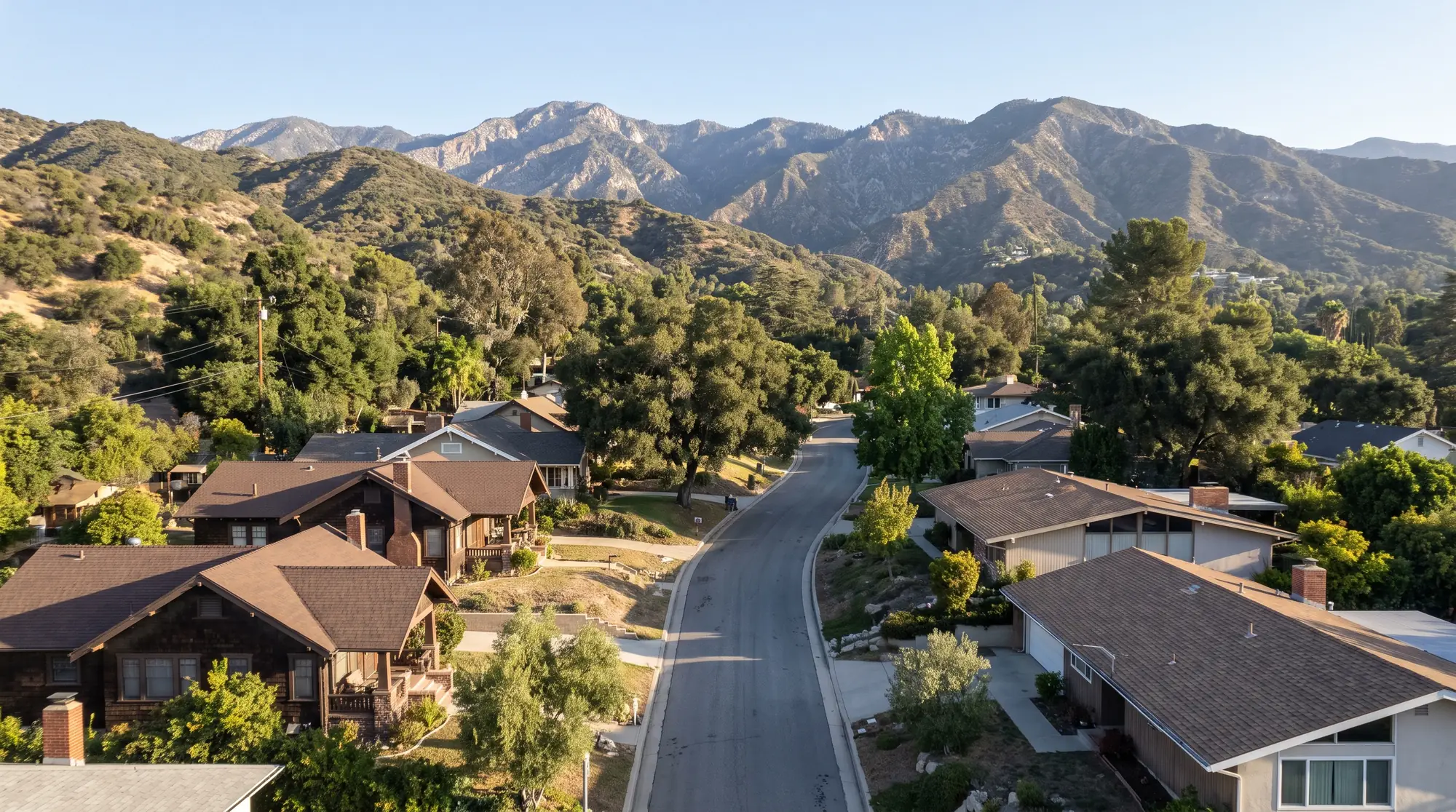
Altadena filled in from the 1900s through the 1960s — Craftsman bungalows and Spanish Colonial Revival across the older south and central streets, post-war ranch through the 1950s, mid-century houses on the upper slopes toward the Angeles National Forest. Most surviving stock is older than the county's 1965 median build year. For houses still standing, that means two problems arriving at once.
- Age-out. Most were re-roofed once, a lot of it in the 1990s, and a thirty-year composition shingle laid in 1994 is finished, fire or no fire. On the Spanish stock, tile fails at the underlayment rather than the tile — it can be perfectly sound while the felt beneath has gone.
- Ember and heat damage that doesn't show from the street. A roof can look untouched and still have embrittled underlayment beneath the tile, melted plastic vents or turbines, charred rafter tails, or ember scarring around penetrations. Attics are worth checking too — embers travel through vents. If nobody has been up there since, that's worth doing before a wet winter finds it for you.
For rebuilds, the key thing is that a rebuild roof is new construction, not a re-roof. There's no existing deck to work off and no old build-up to match. It's designed with the house, framed and sheathed new, engineered with the structure, and has to work with the exterior walls, eaves and vents as a single fire-resistant envelope — specified on the plans and inspected under the building permit, not bolted on at the end.
Roofing work commonly needed in Altadena
- New-construction roofs on rebuilt homes. The bulk of Altadena roofing through 2028, usually under the general contractor running the build.
- Post-fire condition assessment on standing houses. Underlayment, vents, eaves, flashings, attic. Sometimes the answer is a repair, sometimes replacement — worth knowing which.
- Age-out replacement. Composition and tile alike, driven by the calendar rather than the fire.
- Rain-season leak repair, October to March. Valley metal, chimney flashing, skylight curbs, perished pipe boots.
- Chapter 7A upgrades on houses that survived. Ember-resistant vents, enclosed eaves, non-combustible gutters — usually done alongside a re-roof.
- Solar work. Panels off and back on for a re-roof; on a rebuild, planned into the roof from the start.
What roof work costs in Altadena
These are estimate ranges, not quotes. Nobody can price a roof without seeing it or reading the plans.
- Composition shingle replacement: roughly $9,000 to $25,000.
- Tile lift and relay (sound tiles off, new underlayment, same tiles back): roughly $12,000 to $30,000.
- New tile throughout: roughly $25,000 to $60,000 and up.
- Flat or low-slope (TPO, modified bitumen, cap sheet): roughly $12,000 to $30,000.
- Solar removal and reinstall: roughly $4,000 to $10,000, on top of the roof.
A rebuild roof works differently. It's usually priced inside the overall build, and Chapter 7A adds real cost to the build-up rather than to the shingle: a fire-classified underlayment or cap sheet, corrosion-resistant valley metal over a mineral-surfaced cap sheet, listed ember-resistant vents, metal gutters, enclosed eaves. Ask for those line-itemed so you can see what the assembly costs against the surface material. Two quotes that both say "Class A" can be very different roofs underneath.
Permits and code in Altadena
Altadena is unincorporated — the county issues your permit
This trips people up constantly, because Altadena has a Pasadena address and Pasadena neighbours. Altadena is unincorporated Los Angeles County and has no city hall of its own. Your roofing or building permit comes from Los Angeles County Public Works, Building and Safety, with zoning through County Regional Planning — not from Pasadena's building department, which has no authority here. The county runs a dedicated rebuild permitting operation for the Eaton fire area, with expedited review for eligible rebuilds.
Practically: a roofer who works mostly inside the City of Pasadena isn't automatically fluent in the county's process, inspections or paperwork. Fair question to ask before you hire anyone.
Chapter 7A is mandatory, and Class A means the assembly
Altadena sits in a fire hazard severity zone, so Chapter 7A of the California Building Code applies to rebuilds and to material roof work on standing homes. The core requirement is a Class A roof assembly.
That word matters. A Class A rating is earned by the entire tested build-up — deck, underlayment, cap sheet, covering, and how edges, valleys and penetrations are detailed — not by the shingle alone. A Class A shingle over the wrong underlayment is not a Class A assembly. Some coverings are Class A by themselves; many reach Class A only as part of a specific listed assembly, and swapping one component quietly breaks the listing.
Chapter 7A also requires, in broad terms:
- No gaps at the roof edge, ridge or hips where embers can get in — birdstops under tile, closures at the ridge.
- Corrosion-resistant metal valley flashing installed over a mineral-surfaced cap sheet.
- Attic and eave vents that are listed as ember- and flame-resistant.
- Non-combustible gutters and downspouts, with a means of keeping debris out.
- Eaves and exposed rafter tails protected or enclosed.
One more for rebuilds: California's energy code requires solar on new low-rise homes, and low-slope roofs carry cool-roof requirements. Settle both on the plans — retrofitting an array onto a roof that wasn't laid out for it wastes money twice.
Your matched contractor's licence
Every contractor we work with holds a current Contractors State License Board licence and carries insurance, and both are checked before they get your details. Roofing is normally done under a C-39 roofing classification; on a rebuild the roofer often subcontracts to a B general building contractor, in which case check both licences. You get the CSLB number up front, before anyone comes out, so you can look it up on the state register. Worth confirming:
- The status reads active, and the name matches the name on your quote.
- The classification covers roofing.
- Workers' compensation is on file, or a valid exemption is.
- The bond is current.
Any workmanship guarantee is the contractor's, in writing on their own paperwork. Ask what it covers, for how long, and whether the manufacturer's material warranty is separate.
Common questions about roofing in Altadena
Who issues my roofing permit in Altadena?
Los Angeles County Public Works, Building and Safety. Altadena is unincorporated, so despite the Pasadena mailing address the city has no jurisdiction over your roof. Zoning goes to County Regional Planning.
What actually makes a roof "Class A"?
The whole assembly, tested together — deck, underlayment, cap sheet, covering, and the detailing at valleys, edges and penetrations. Ask your contractor to name the listed assembly, and check the submitted plans say the same thing.
My house survived the fire. Does the roof still need looking at?
It's worth it. Ember and radiant heat damage often sits out of sight: embrittled underlayment beneath tile, melted vents, charred rafter tails, scarring at penetrations. A roof that looks fine from the driveway can still let water in come October.
Can I put back the same roof I had before?
Not always. Chapter 7A applies regardless of what was there before, so the assembly, vents, gutters and eave details all have to meet current requirements. You can often match the look — tile stays tile — but the build-up underneath will be different.
Do I have to put solar on a rebuilt house?
New low-rise homes in California are generally required to include solar, subject to the energy code's exceptions. Either way, decide at design stage — adding panels to a roof that wasn't planned for them means paying twice. On an older standing house the rule of thumb holds: if the roof is fifteen years or more old, replace it before the panels go on.
When you're ready, tell us what's going on and we'll match you with one licensed Altadena roofer, licence number up front. There's more on roof replacement, roof repair and roofing contractors in Pasadena.